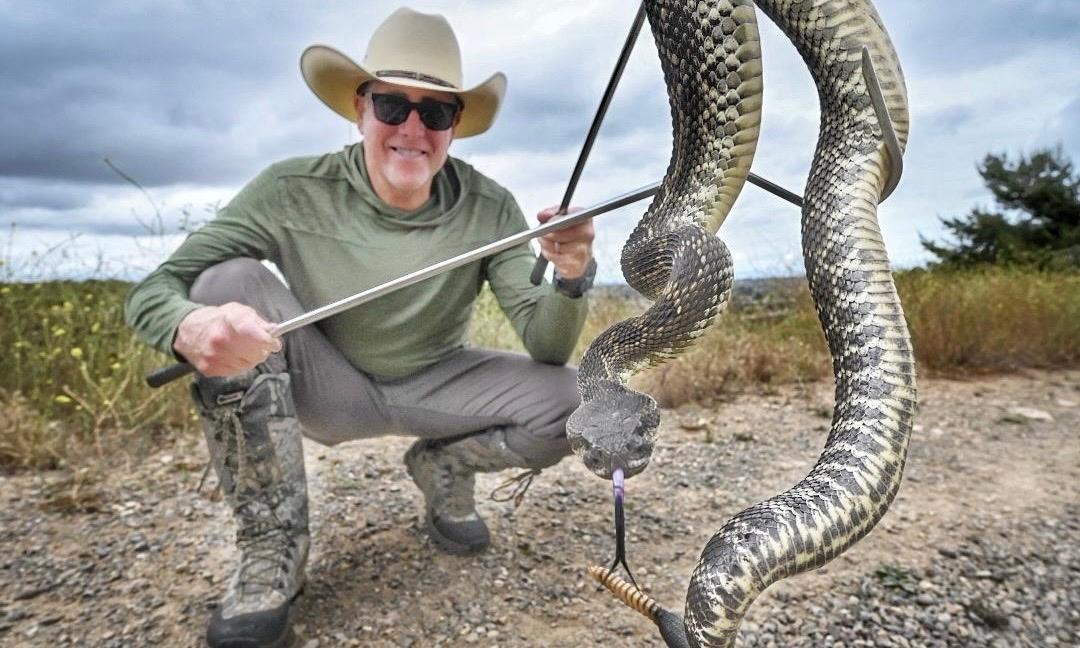
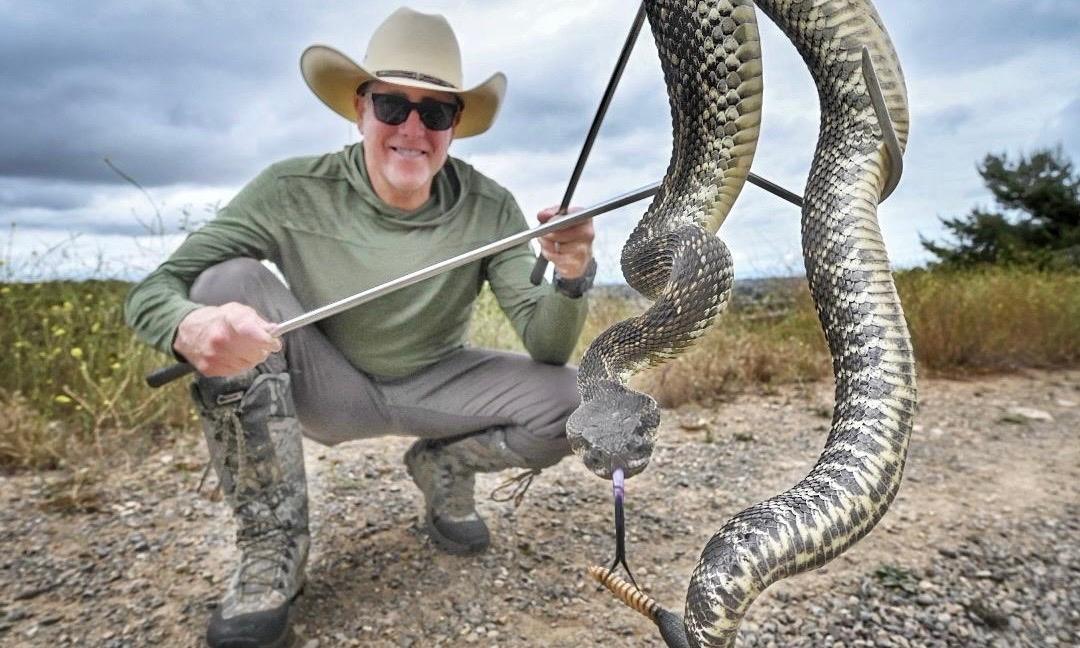
In San Diego, the local snake wrangler responds to frantic calls from residents and turns fear into understanding. Franck Pedretti met Bruce Ireland, the “Snake Whisperer”.
Read the original article in French here.
Sometimes, a single phrase is enough to spark panic in Southern California: Rattlesnake!
The rattlesnake: The neighbor we'd rather avoid
In San Diego, rattlesnakes aren't creatures you only see in nature documentaries. They live alongside us—in canyons, beneath decks, behind barbecue grills, and sometimes even inside garages. And when someone spots one, the scene is almost always the same: children rush indoors, the dog starts barking... and someone reaches for a shovel.
That's exactly when Bruce Ireland gets the call.
At 58, Bruce Ireland has become one of San Diego County's best-known snake wranglers. His phone number circulates constantly on Facebook, Nextdoor, and other neighborhood groups. With a combined social media following of more than two million people, he has become something of a local celebrity.
For snake removal, call (619) 204-5117. Bruce Ireland’s services are free, donations welcome.
On warm days, his phone rings nonstop.
His first response never changes: "Send me a photo. I'll tell you whether it's dangerous. If necessary, someone from my team will come relocate it. But whatever you do... don't call 911. Emergency responders need to stay available for real emergencies."
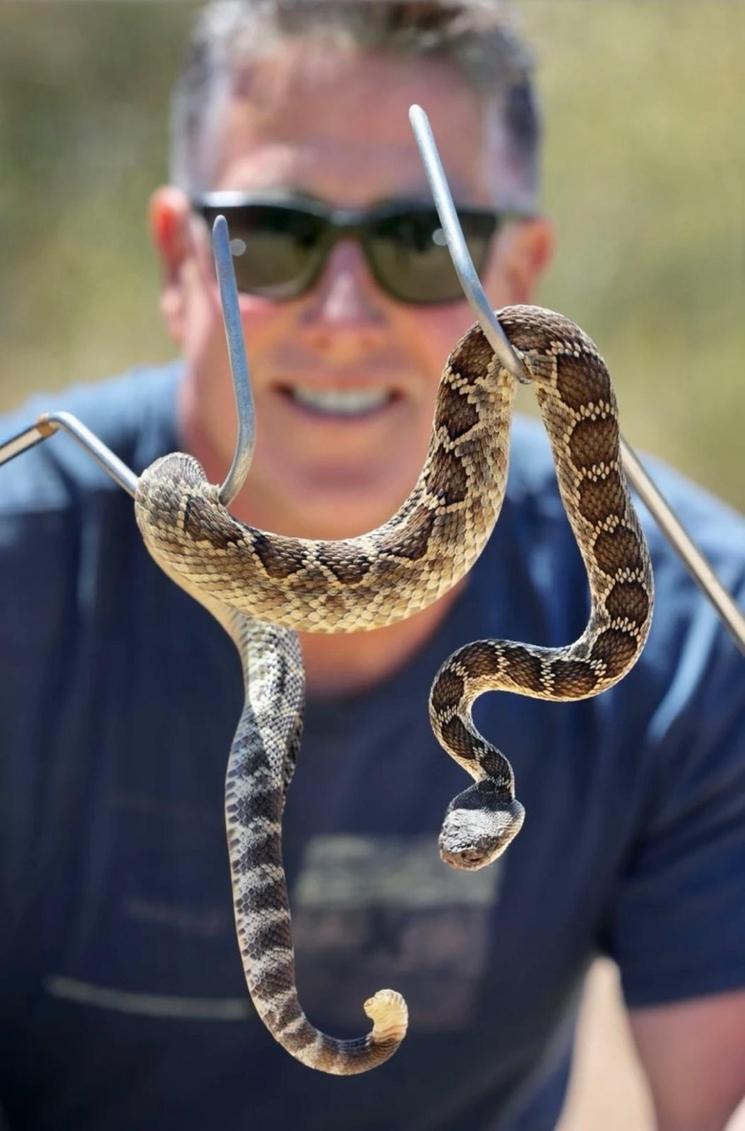
Ironically, Bruce Ireland never built a career in wildlife.
His full-time profession is in hotel design sales—about as far removed from reptiles as one could imagine. Yet for years, he has devoted much of his free time to a very unusual mission: safely relocating snakes without harming them, whether they're venomous rattlesnakes or harmless but equally intimidating gopher snakes.
Unlike the stereotypical snake hunter, Bruce Ireland doesn't chase snakes.
He studies them. He understands them. And he relocates them to prevent unnecessary deaths—both theirs and potentially ours. By moving snakes away from residential areas, he protects wildlife while helping families avoid dangerous encounters.
Every year, between 7,000 and 8,000 people in the United States are bitten by venomous snakes. Yet thanks to rapid medical treatment and antivenom, fatalities remain remarkably rare, averaging only about five annually. The greatest danger is often not the snake itself, but the panic that leads people to try to kill or handle it.
More educator than cowboy
His nickname sounds like something straight out of the Wild West.
In reality, Bruce Ireland's work often resembles that of a highly skilled technician more than a cowboy—although he certainly looks the part.
One day the snake is hiding beneath a trampoline. The next it's tucked behind a washing machine, coiled beside a swimming pool, or resting in a backyard where children play.
The hiding places change.
His approach never does.
Bruce Ireland observes. Explains. Captures. Educates. Relocates.
Always with his iPhone in hand, documenting each encounter—not only the snake, but also the reactions of the homeowners.
His method is built on calm, precision, and respect.
He never uses violence.
Instead, he spends most of his time educating the people who called him, thanking them for picking up the phone instead of a shovel.
"Snakes play a vital role in our ecosystem," he explains. "They're here for a reason. Some control rodent populations, while others even regulate other snake species. The California kingsnake, for example, actually eats rattlesnakes because it's immune to their venom."
Over the years, Bruce Ireland has built an entire network of trained snake specialists. Today, nearly thirty team members respond throughout San Diego County—from Encinitas and Carlsbad to Vista, San Marcos, and Escondido. He also trains local firefighters on how to safely handle snake encounters.
His philosophy can be summed up in three simple ideas:
Educate rather than eliminate. Relocate rather than kill. Understand rather than panic.
One of the biggest misconceptions concerns rattlesnakes themselves.
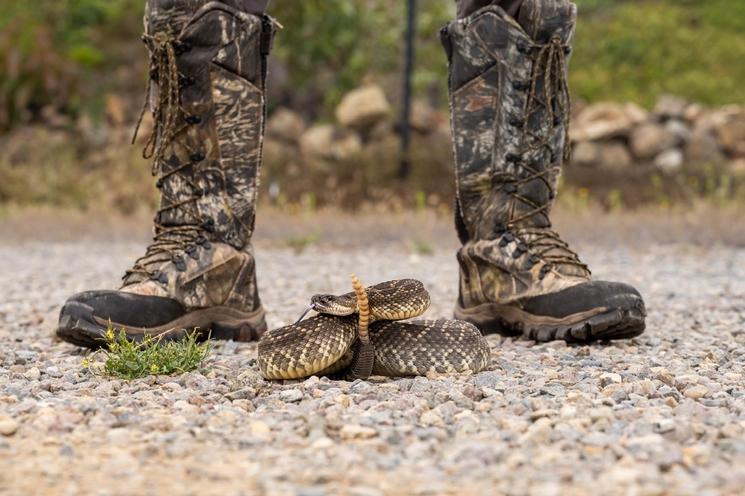
Contrary to Hollywood movies, they do not hunt people. They do not chase humans.
Their rattle isn't a threat.
It's a warning.
In essence, the snake is simply saying:"I'm here. Give me space, and we'll both be fine."
Bruce often reminds people of another surprising fact:"Most snake bites happen when someone tries to kill or handle the snake."
Sometimes, our fear poses a far greater danger than the animal itself.
A lifelong fascination
After thousands of snake relocations, Bruce Ireland spends surprisingly little time talking about snakes themselves.
Instead, he talks about our relationship with them.
About the instinctive fear that leads us to destroy what we don't understand.
One of his biggest public safety messages concerns dogs. Every year, countless pets are bitten after trying to sniff, investigate, or play with a snake.
His advice is simple:"Keep your dog on a leash in natural areas. It could save its life."
Yet after all these years, Bruce remains just as captivated as ever.
"I never get tired of them. Their colors, their patterns... they're beautiful. I completely understand why people fear them, but snakes want to avoid us far more than we want to avoid them."
That mindset has helped make Bruce Ireland known far beyond San Diego.
When a video of Robert F. Kennedy Jr. handling snakes went viral, social media users joked repeatedly:"Where's Bruce when you need him?"
Journalists even contacted him for his professional opinion."Honestly," he laughed, "I'd give him a 9 out of 10."
More recently, his expertise was sought during the early days of the FIFA World Cup, when Switzerland's national team established its training camp near sensitive wildlife areas around San Diego, prompting discussions about safely managing potential encounters with local wildlife. His name even made international headlines.
Still, Bruce Ireland doesn't seek attention.
It simply seems to find him.
Most recently, Coyote Peterson—the wildlife educator behind the wildly popular YouTube channel Brave Wilderness, followed by more than 21 million subscribers—reached out to invite Bruce Ireland to appear in an episode dedicated to his work.
The invitation made him smile.
Long before becoming a recognized snake expert himself, Bruce Ireland had been an avid fan of the channel. The meeting between the two wildlife enthusiasts felt almost inevitable.
One thing is certain: Bruce Ireland isn't finished changing the way we see snakes.
F.P.
A note on how our journalist Franck Pedretti and Bruce Ireland met
"I met Bruce almost by accident—or rather, because of a four-foot rattlesnake comfortably resting on the retaining wall outside our residence. Like many people, my first reaction was fear. I'd heard about Bruce, so I gave him a call. I grew up in the French Alps, where a healthy mistrust of vipers was almost instinctive—a fear inherited from childhood. I also belong to the generation raised on Jaws, the film that nearly convinced us a great white shark could somehow appear in a swimming pool halfway up a mountain.
Jokes aside, snakes suffer from much the same phenomenon: people fear them long before they understand them. After following Bruce on social media and watching countless videos of his work, I invited him to lunch for this profile. Around midday—as reptiles emerged to bask in the warmth—his phone never stopped buzzing with calls and text messages.
Little by little, my perspective changed, and I'm grateful to him for that. Today, when I encounter a snake during a mountain bike ride, fear has given way to respect and curiosity. Talking with Bruce also revealed another story—that of a shy little boy who lacked self-confidence. Catching snakes gradually became a way to prove to himself, and to others, that he could overcome his own fears. What began as a personal challenge has grown into a genuine mission: protecting people while respecting nature."

 L'agenda