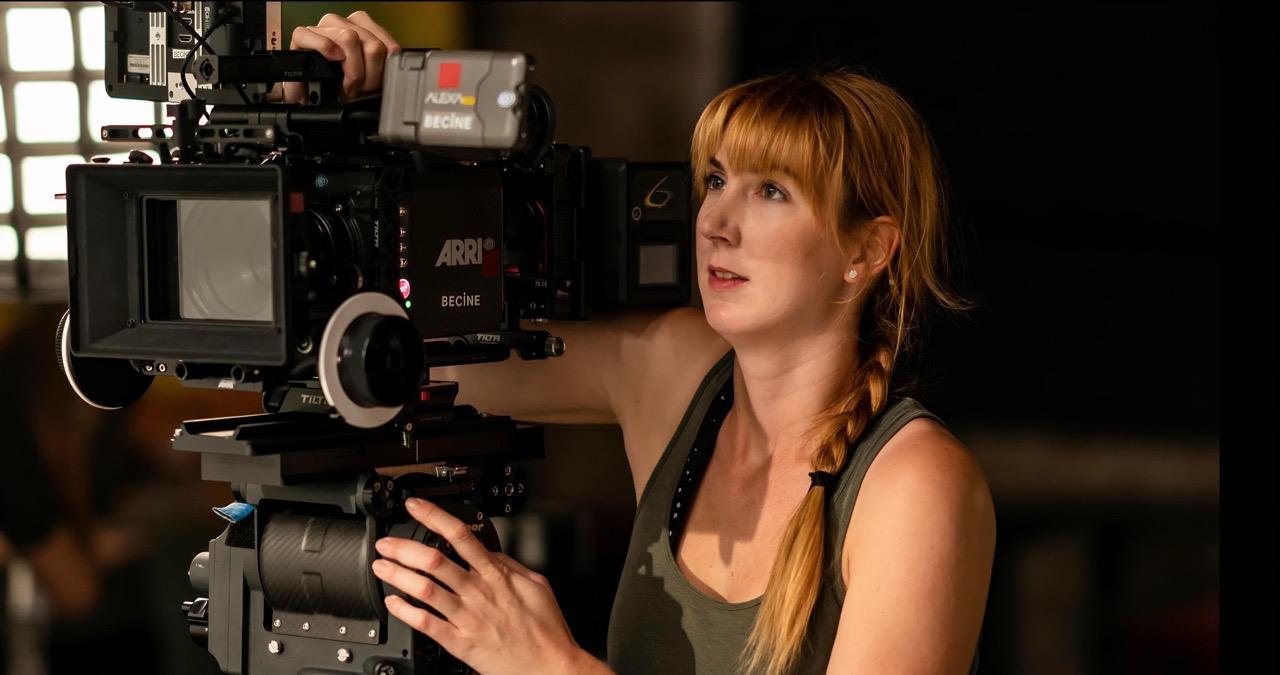
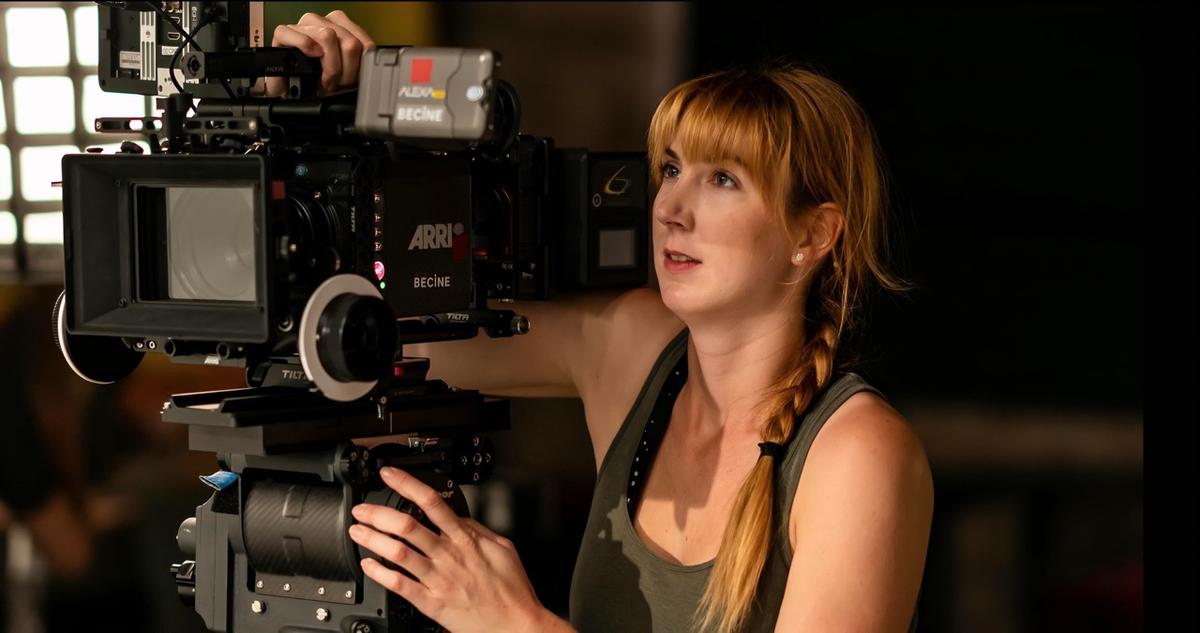
Johanna Coelho arrived in Los Angeles in 2011 with no connections in the film industry. Since then, she has steadily made her mark behind the camera, ultimately becoming the sole director of photography on The Pitt, HBO Max’s hit medical drama starring Noah Wyle. After The Rookie, several feature films and fifteen years spent carving out a place for herself in Hollywood, the French cinematographer tells us about the patient climb that led her to the heart of one of the most demanding sets on American television. Interview by Anaïs Maquiné Denecker.
Read the original interview in French here.
Le Petit Journal: Who would have thought that borrowing your parents’ camera at 14 would lead you to find your calling and build a career in Hollywood?
Johanna Coelho: Yes, it’s dizzying to think about… I’ve always loved stories and wanted to explore different professions. At one point, I wanted to become a doctor; at another, I wanted to design clothes. When I realized that a camera could allow me to discover completely different personalities, cultures and worlds, I had found the perfect profession. I no longer had to choose. I attended a science-focused high school with a cinema option, then completed an audiovisual degree in Boulogne-Billancourt. What fascinated me was the intersection between art and technology: lighting, lenses, framing and the way you tell a story visually.
Le Petit Journal: Why did you leave France to study filmmaking in Los Angeles?
Johanna Coelho: I had always been drawn to American cinema. At first, I was thinking about applying to USC, but then a French woman who had attended the American Film Institute told me about its program, which was much more hands-on and entirely focused on cinematography. I was lucky enough to be accepted. There were 28 cinematographers from all over the world in my class. That diversity completely reshaped the way I approached lighting, framing and visual storytelling.
Le Petit Journal: What were you looking for by bringing your French cinematic culture into dialogue with Hollywood’s?
Johanna Coelho: I admired David Fincher, particularly the way he uses images to reinforce the narrative. But I also love the emotional truth of French cinema, its intimacy with the characters, as you see in the work of a filmmaker like Céline Sciamma, for example. I found the idea of combining that sensitivity with the visual power of American cinema fascinating.
Le Petit Journal: Did you adapt to Los Angeles right away?
Johanna Coelho: It took time. I was struck by how warmly people welcome you, and then by the fact that this sense of closeness can disappear the very next day. In France, perhaps we take longer to open up, but once a relationship is established, it runs deep. I had to learn to distinguish friendliness from trust. At first, I spent very little time with other French people, which forced me to truly learn English and integrate.
Le Petit Journal: You arrived without family or contacts in the industry. How do you build a career in Hollywood from scratch?
Johanna Coelho: I answered job postings, worked on short films, music videos, interviews and lots of small projects, sometimes for free, while also working as a camera assistant, electrician or grip. Then I realized that if I kept doing that, people would only call me back for those jobs, never as a director of photography. So I took the risk of working less and only accepting jobs as a camera operator or cinematographer. Within a few months, I started building the right network and developing my portfolio.
Le Petit Journal: You have worked in documentaries, reality television, true crime, music videos and independent films. Did that apparent lack of specialization ultimately become a strength?
Johanna Coelho: Absolutely. Every format taught me something. Reality television and documentaries taught me to observe everything happening around me and react very quickly. True crime gave me the opportunity to experiment with more stylized lighting. In the United States, you’re less likely to be pigeonholed. That variety gave me a toolbox I can draw from depending on the project.
Le Petit Journal: The Rookie (ABC – M6) was your first major breakthrough in American television. How did that door open?
Johanna Coelho: The production was looking for a director of photography who was available to strengthen the team. The showrunner and the DP made me feel confident. At first, I observed, and then I realized that the work was fundamentally the same as in film, with one major difference: in television, everything moves much faster.
Le Petit Journal: You were one of the youngest cinematographers to work for a major American network, in a profession that is still largely male-dominated. Did you have to overcome stereotypes?
Johanna Coelho: There were still very few women working in television when I started. But I never thought the weight of a camera was an obstacle. It’s all about finding the right balance between your shoulders and hips, and women can actually have a great deal of flexibility when operating a camera.
Le Petit Journal: How did you become the sole director of photography on The Pitt?
Johanna Coelho: The production was looking for a very specific profile: someone who knew how to operate a camera, had documentary experience and could design a highly mobile shooting setup. I thought I was interviewing to be the second DP, alternating with someone else. But then they told me they only wanted one person for the entire series. I called my agent and told her I didn’t have the résumé to carry an HBO show on my own. She said, “Have fun. Defend your vision.” So I kept going through the interviews, and I got the job.
Le Petit Journal: How do you translate the intensity of an emergency department into a visual language?
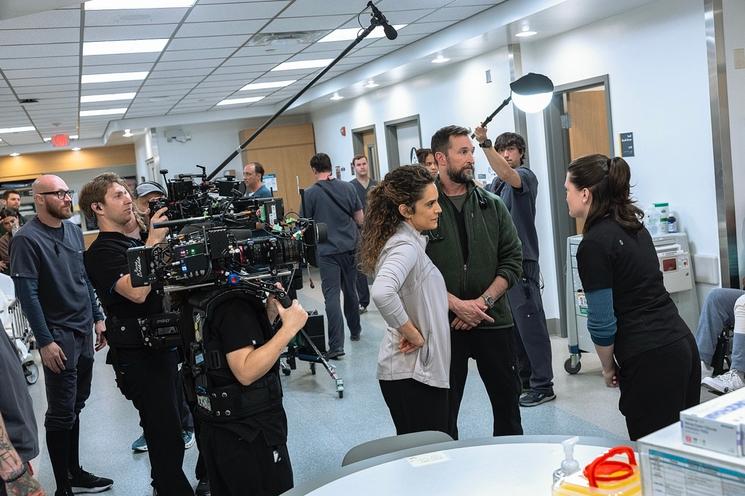
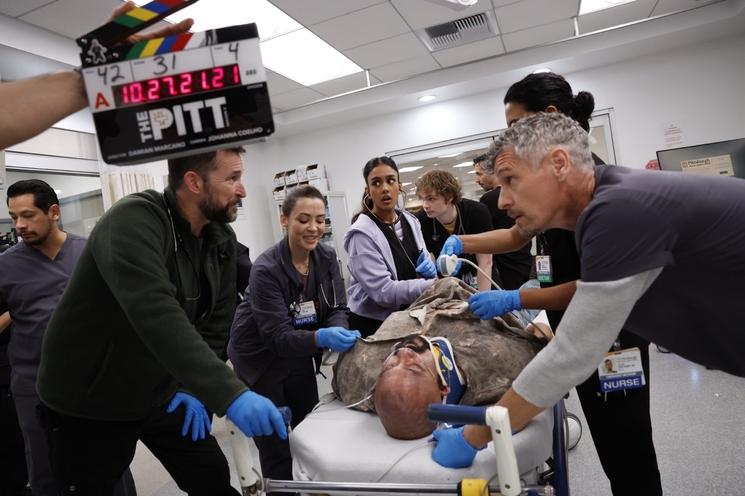
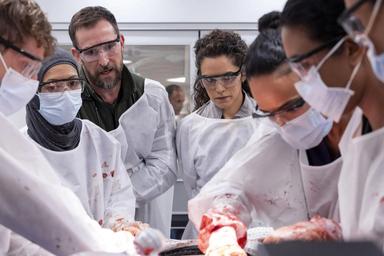
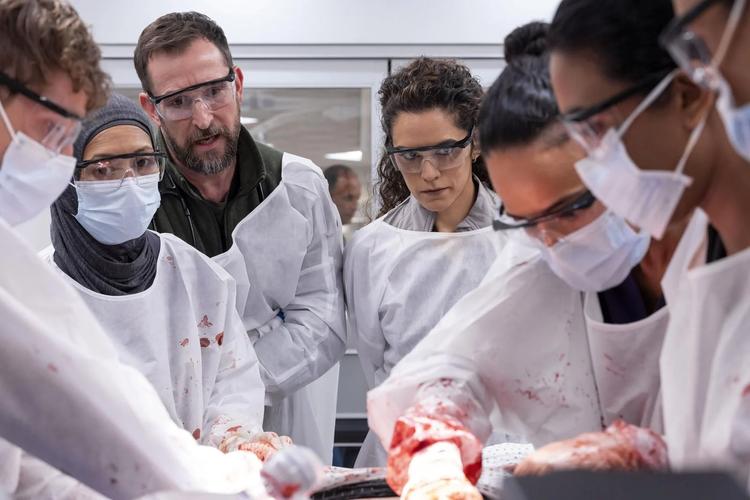
Johanna Coelho: The set was designed to be shot in 360 degrees. There are no marks on the floor or lights forcing the actors to stand in a specific place. The overhead lighting was designed to reflect off the floors, and there’s no heavy equipment moving around the set. The actors are free to move, and everything happening in the background is part of this constantly moving environment. The cameras, mostly handheld or mounted on highly mobile rigs, move with them. It feels almost like shooting a documentary or a live broadcast.
Le Petit Journal: The series creates the impression that the hospital never stops. How do you create that sense of continuity?
Johanna Coelho: The scripts describe exactly what is happening in the background. Someone might walk behind a conversation, the focus shifts to them, and suddenly we enter a new story without breaking the energy. We work extensively on these handoffs between characters. The goal is for the camera to never seem to interrupt the flow of the hospital.
Le Petit Journal: And yet you’ve said that creating this very natural-looking image has been the most difficult work of your career…
Johanna Coelho: Yes. I’ve created highly stylized images, with period effects or spectacular lighting, and sometimes I find that easier. On The Pitt, the camera moves everywhere, and we are constantly adjusting light levels for different skin tones so that everything looks real. That work is rarely noticed precisely because it’s invisible. But if the audience believes what they’re seeing, that’s the greatest reward.
Le Petit Journal: What role does Noah Wyle play in this pursuit of realism?
Johanna Coelho: Noah is an actor, director and producer. He knows the series better than anyone. His experience on ER also gave him an impressive knowledge of medical procedures and the tricks that make them look believable on screen. He knows how to show actors where to place their hands or how to simulate an intubation depending on the position of the camera.
Le Petit Journal: Is your French perspective seen as something distinctive on set?
Johanna Coelho: My accent leaves no doubt about where I come from! But I wasn’t hired because I was French. Maybe they thought I would see certain things differently. More than anything, being a foreigner has made me more adaptable. I’ve had to learn different cultural codes and different ways of communicating. I’ve also kept a certain French directness and, perhaps, a particular sensitivity to emotions.
Le Petit Journal: Has the success of The Pitt changed your career? (Editor’s note: The Pitt leads all shows with 25 nominations at the 78th Emmy Awards that are taking place today, September 14 2026.)
Johanna Coelho: We knew we were making a good show, but nobody expected this kind of response. It changed the trajectory of the entire team. For me, the fact that the series is now so well known will give people confidence when they consider hiring me for other projects. The recognition is all the more meaningful because my family comes from a scientific background and worried when I chose an artistic career. Now they come to the set, discover this world and have become fans.
Le Petit Journal: You are now a co-producer on the third season. What does this new role change for you?
Johanna Coelho: It recognizes my involvement in the series and allows me to have a broader understanding of everything that is happening, from the script to production. I can be more involved upstream and help guide new directors while continuing to serve as director of photography. Cinematography remains what I’m most passionate about, but I like understanding the project as a whole so I can serve it better.
Le Petit Journal: After fifteen years in Los Angeles, would you consider working in France again?
Johanna Coelho: I miss France, even though Los Angeles is home now. I would really love to work on French projects or French-American co-productions. I almost joined the fifth season of Emily in Paris, but my schedule on The Pitt wouldn't allow it. My dream would be to move back and forth between the two countries and their two cinematic cultures.
Le Petit Journal: What advice would you give to a young French woman hoping to follow a similar path?
Johanna Coelho: Don’t sit at home waiting for things to happen. You have to get out there, meet people, create your own opportunities and, above all, trust your own eye.
Sur le même sujet

 L'agenda