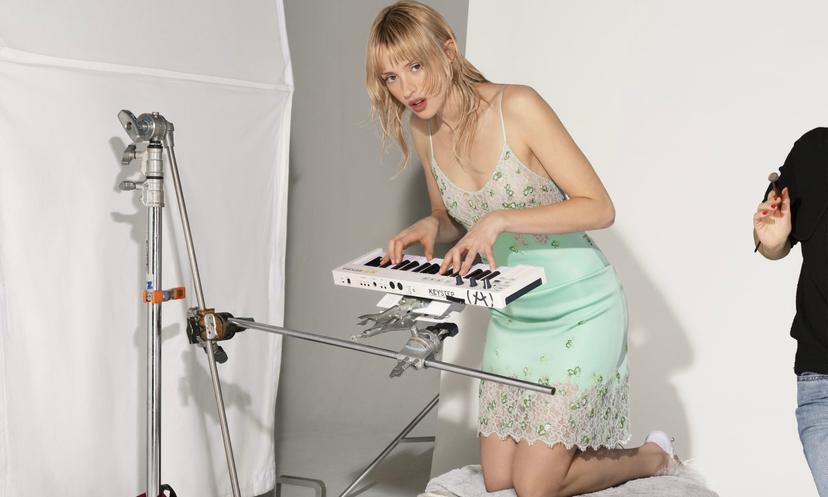
2026 is Olivia Wilde’s year. In I Want Your Sex, Gregg Araki’s provocative new pop thriller, released July 29 in France and July 31 in the United States, Wilde plays a powerful artist who draws her young employee into a manipulative and abusive relationship. On Tuesday, July 28, at the Directors Guild of America in Los Angeles, the actress and filmmaker spoke with Anaïs Maquiné Denecker about aging, experience, and the lessons American women could learn from the French when it comes to sexuality.
Read the original article in French here.
Camera flashes lit up the red carpet outside the Directors Guild of America. On Sunset Boulevard, the premiere of I Want Your Sex brought together the cast and creative team behind a film whose title alone promises a provocative ride. Gregg Araki is no stranger to controversy. From The Doom Generation and Nowhere to Mysterious Skin and Kaboom, the American filmmaker has spent nearly four decades exploring desire, fluid identities, and bodies that refuse to conform to society’s expectations.
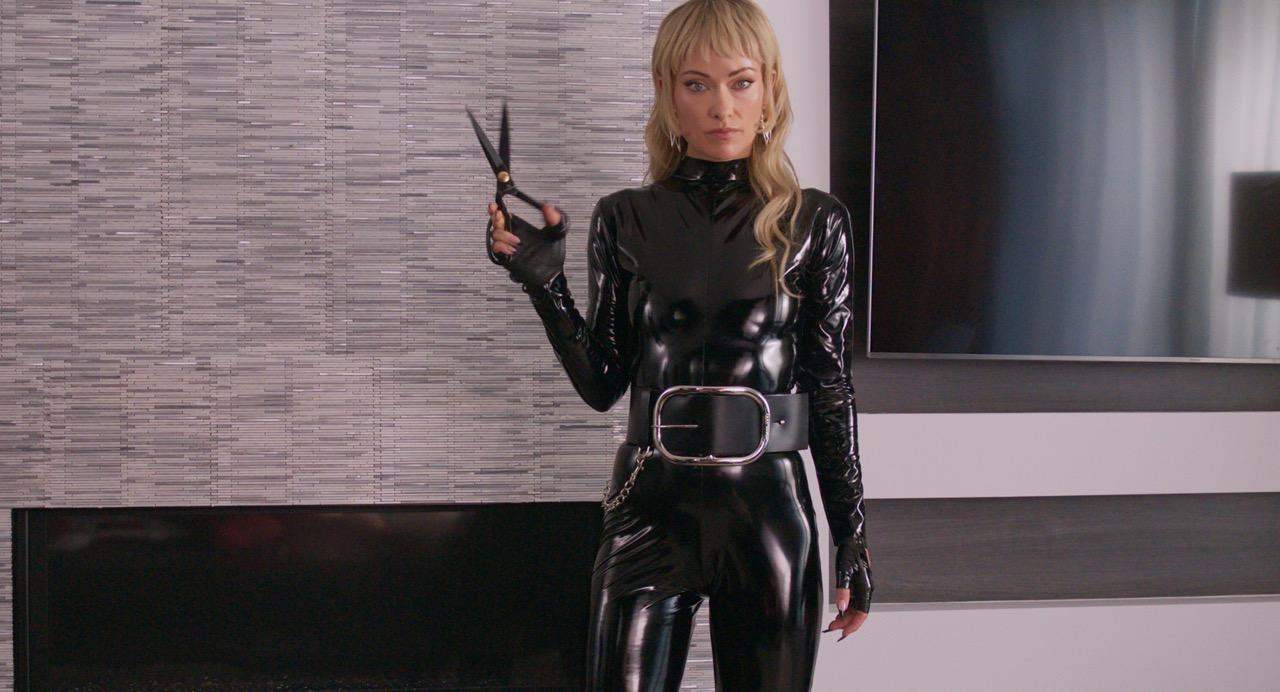
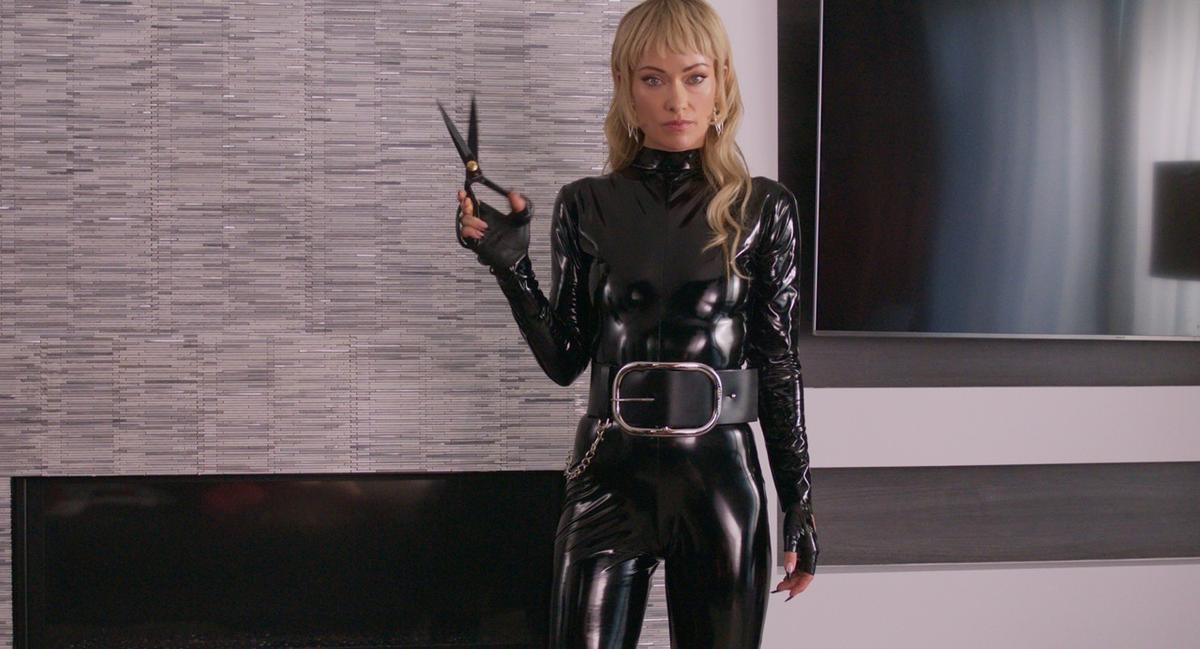
Olivia Wilde steps onto the carpet and pauses at our microphone. In just a few moments, audiences will meet Erika Tracy, the contemporary artist she portrays on screen—a commanding woman who rules both her gallery and her sexuality, turning her young employee into the object of a seductive game of attraction, control, and domination.
Effortlessly natural, wearing two angelic braids and a radiant smile, Wilde could not seem further removed from the cold, sophisticated predator she embodies in the film. So when asked what American women could learn from French women about sex, she answers without hesitation:“Everything! We've all been trying to learn from the French ladies about sex forever, and I don't think we've learned enough. I don't think we've been paying close enough attention. I think a that, personally, one of the lessons I've learned from French women is that you get better as you get older. And this idea of wisdom being very sexy, experience being sexy. I think that's something this movie is very much about, and something that personally I discovered to be very true.”
In an industry that still too often treats an actress's age like an expiration date, the statement feels almost like a manifesto. At 42, Olivia Wilde is no longer asking Hollywood for permission to exist. She is choosing projects that explore desire from radically different perspectives.
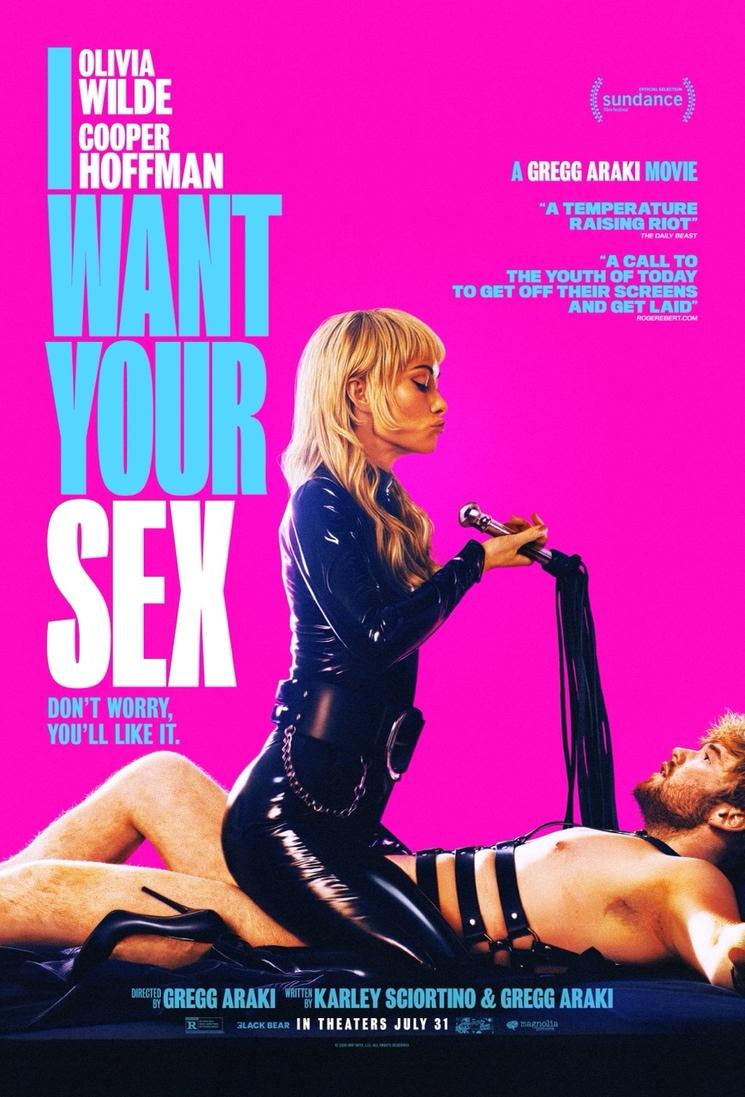
In I Want Your Sex, her character Erika Tracy dictates the rules to Elliot, her younger assistant, played by Cooper Hoffman. Best known for Licorice Pizza, the son of the late Philip Seymour Hoffman already possesses that rare ability to reveal vulnerability without ever overstating it. Alongside him, Mason Gooding—son of Cuba Gooding Jr.—completes the trio. Neither has simply inherited his father's talent; both are sharpening it into something distinctly their own.
With his unmistakably queer aesthetic, Gregg Araki embraces the conventions of the erotic thriller before flooding them with vibrant colors, humor, and provocation, gradually shifting the audience's perspective. Here, sex is never merely physical—it becomes currency, an instrument of power, and a reflection of characters struggling to distinguish between what they truly desire and what they simply accept.
For Olivia Wilde, however, the film is ultimately about what people project onto one another within a relationship:“Erika and her employee, Elliot, aren't just in a dominant-submissive relationship. They have undeniable chemistry. They reveal themselves to each other; through this relationship, each discovers a part of themselves they didn't know existed. That's what it's all about!”
Her second project of the year explores desire from the opposite angle. In The Invite, released in the United States on June 26 and arriving in French theaters on September 16, Wilde steps behind the camera as director while also starring as Angela, a wife trapped in the routine of a long-term marriage with her husband Joe, played by Seth Rogen. Instead of examining desire as power, the film asks what happens when desire slowly fades.
To prepare for the film, Wilde drew inspiration from renowned psychotherapist Esther Perel. “Her perspective on relationships completely blew me away. I grew up believing that the most important thing was to find someone to spend my life with, rather than asking myself who I really am and what role I want to play in a relationship. For a long time, I probably didn't understand what Esther Perel meant. Then I went through twenty years of life and love stories before making this film. And that's when it all made sense. I realized that you don't look for a partner to fill a void. You have to become a whole person first before building a relationship with someone else.”
She also points to one of the film's most revealing moments, when Joe confronts Angela: “When he says, 'You're supposed to be attracted to me. You're supposed to desire me. You're my wife,' you can see the veins popping out of my neck. I kept thinking to myself: No! I felt like that sentence encapsulated everything that's wrong with the way we view relationships. As if the other person were supposed to desire us forever, without us having to do anything to contribute to it, without even having to nurture that desire. We don't talk enough about sexuality with the person we live with. We simply take that desire for granted.”
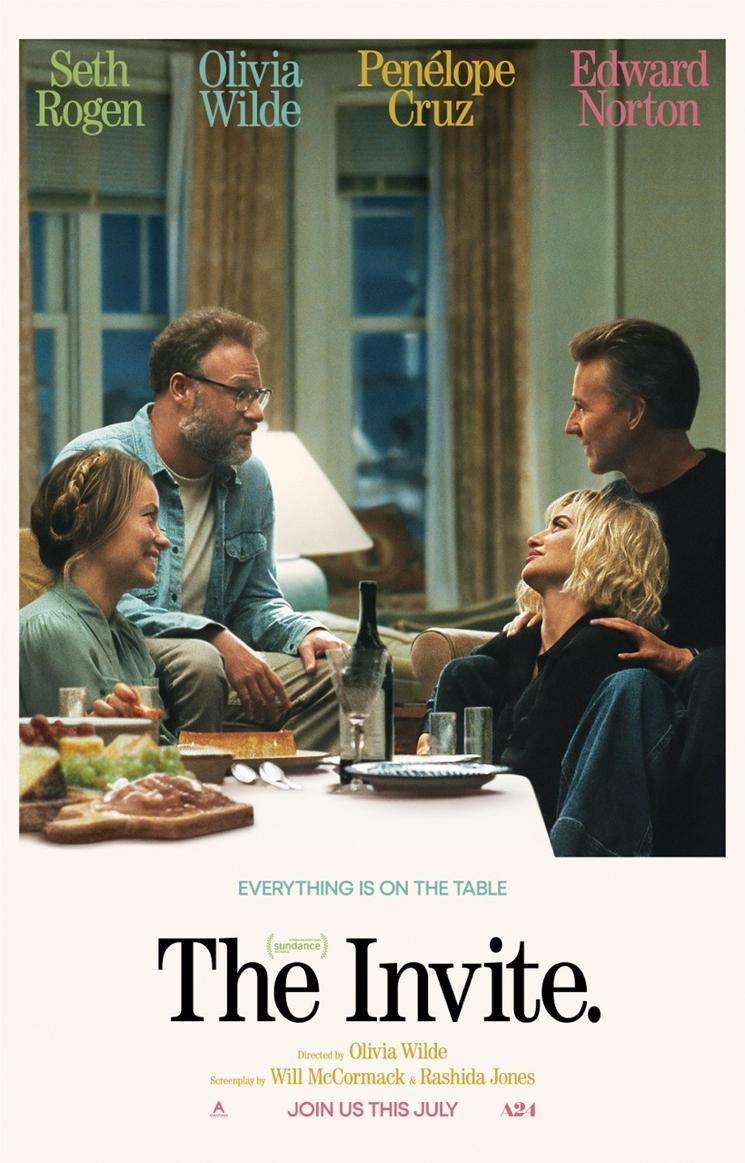
From one film to the next, Olivia Wilde reverses the balance of power. In I Want Your Sex, Erika commands desire and uses it to control a younger man. In The Invite, Angela is trying to understand why that desire has disappeared. Two women at opposite ends of the emotional spectrum, yet both tell the same story: desire is never guaranteed.
Before leaving the red carpet, Wilde returns one final time to the subject of aging, offering a perspective far removed from Hollywood's obsession with youth: “As we get older, we come to realize above all that we know almost nothing. Maybe that's what true wisdom is. We become more humble, more empathetic. We finally accept the idea that we might be wrong.”
The actress first captured audiences' attention in House M.D., but she has come a long way since then. Now at the height of her career, Olivia Wilde is choosing the stories she wants to tell and the women she wants to portray—complex, layered, flawed characters who desire, manipulate, question, age, and, above all, refuse to disappear.
A.M.D.
Sur le même sujet






 L'agenda