Could smartphone series be helping save Los Angeles? That’s what the latest data on filming activity in the City of Angels seems to suggest. Le Petit Journal asked French professionals working in the industry for their take. By Sarah Jean.
Read the original article in French here.
Still relatively unknown in Europe, the “vertical” format is gaining considerable momentum in the United States—to the point that it is now at the center of a movie hitting theaters today, Tuesday, September 1. Making a movie about verticals when we’re only just beginning to discover they exist is pretty wild (and deliciously meta). Those Angelenos really are one step ahead!
While China pioneered the market, all the major Hollywood studios have announced investments in this new type of production, an industry expected to generate $150 billion this year. The Walt Disney Co. has just signed a new partnership with TikTok that will allow more vertical videos created by content creators to appear on the Disney+ streaming platform. Netflix is reportedly preparing to enter the market as well, already trailing the likes of WME, Showtime, NBCUniversal and Miramax.
Verticals: What exactly are they?
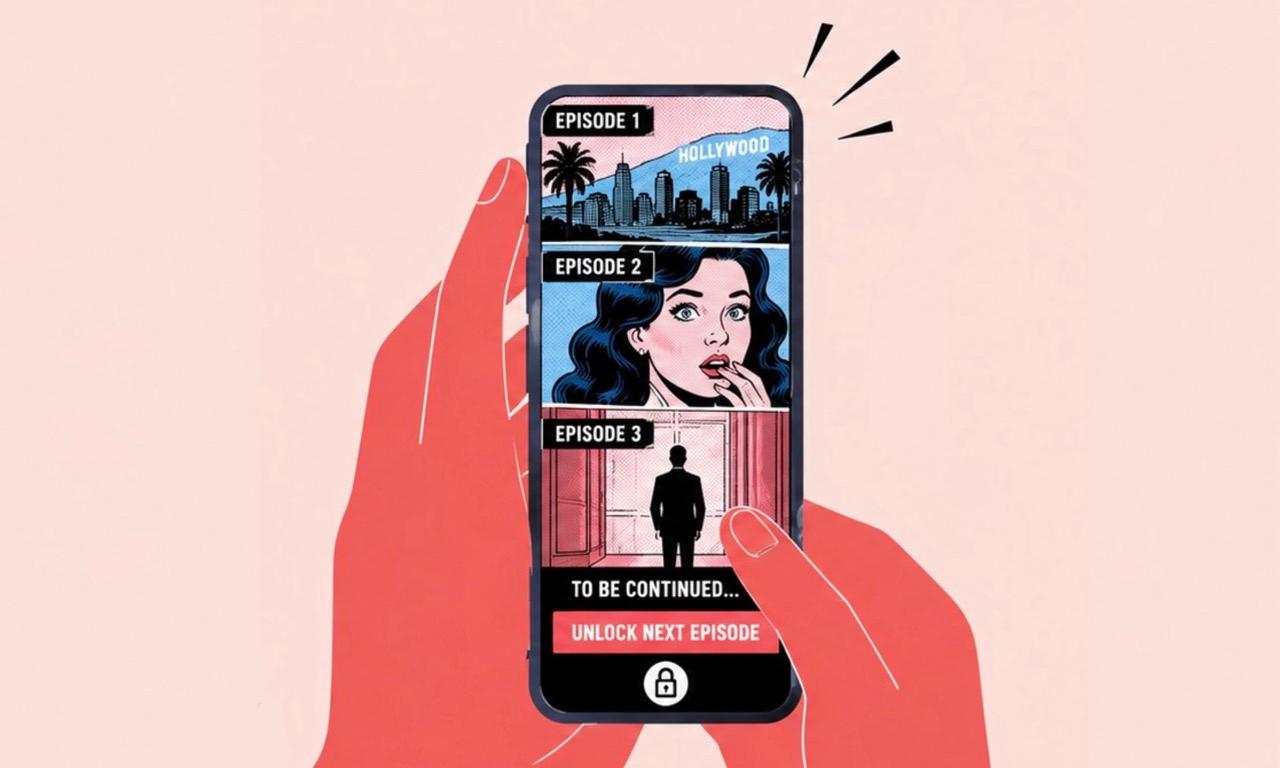
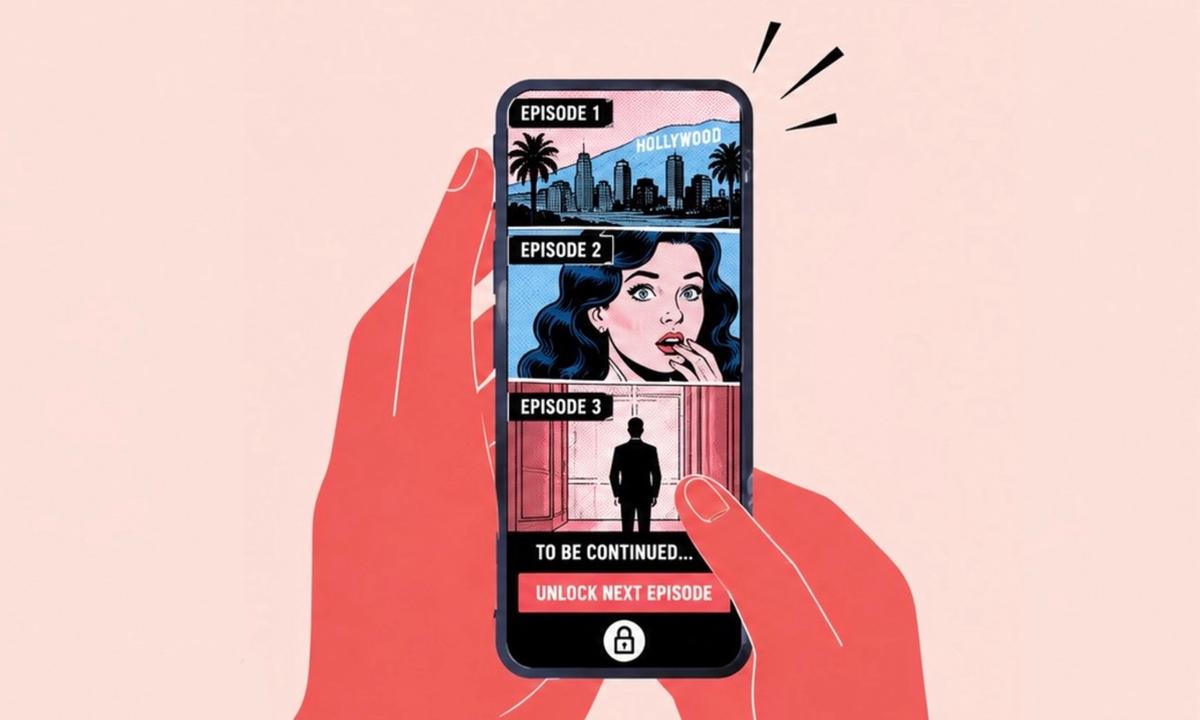
The concept is simple: series filmed in portrait mode and designed specifically for smartphones, with episodes lasting between one and three minutes and storylines built around a succession of cliffhangers. After a few free episodes, viewers must either watch ads or subscribe to keep watching.
French producers, however, aren’t entirely convinced just yet. For Martine Melloul, a French producer based in Los Angeles: “There’s something so exaggerated about the drama that it makes it feel cheap, disposable…”
But if major studios are investing in the format, it has less to do with the originality of the productions than with their profitability. In the world of verticals, the mantra is clear: produce more, faster. And therefore, cheaper. An entire series can be shot in just six to eight days. With fewer sets, smaller crews and cameras framing actors much more tightly, shoots can be remarkably efficient.
“Everything moves very, very fast,” confirms French actress Adriana Vecchioli. Although she also writes and co-produces films, acting remains her primary passion. Over the past year, she gradually began seeing casting platforms flooded with opportunities for vertical productions, so she decided to give them a try. After initially having little success, she learned to master the format and its codes and is now moving from one shoot to the next. She has since appeared in more than 40 productions and welcomes the new economic momentum the market is bringing to Hollywood.
A booming market
When it comes to revenue, the numbers are staggering. According to The Hollywood Reporter, global downloads of dedicated vertical-series apps surged in 2025. ReelShort, the Chinese giant and one of the sector’s pioneers, was downloaded 100 million times over the past twelve months, including 37 million downloads in the United States.
Six years after the Covid pandemic first fueled an explosion of this type of content in China, the global market was worth $3 billion in 2025 from subscriptions and advertising, according to a study by consulting firm Owl & Co., headed by Hernan Lopez, the former CEO of Fox International Channels.
Some productions have achieved spectacular success, including The Double Life of My Billionaire Husband, which reportedly generated more than $4 million. The plot? A beautiful, penniless young woman, overwhelmed by her mother’s medical bills, turns to her wealthy businessman father for help. Now remarried to a wicked stepmother, he is prevented from helping her. Unless, of course, she agrees to marry the illegitimate son of another wealthy businessman in place of her half-sister, who wants nothing to do with the disgraced stranger. Unsurprisingly, the supposed ugly duckling turns out to be a handsome, incredibly wealthy and powerful young man. Naturally, he falls for the damsel in distress and solves all her problems. So much for groundbreaking storytelling...
When AI enters the picture
This highly formulaic approach to romance, which often reduces female characters to stereotypes—when it isn’t outright misogynistic or degrading—is taken to an extreme in a particularly unusual genre known as AI fruit slop: vertical videos whose storylines are generated by artificial intelligence.
The term “slop” refers to the flood of pointless and absurd AI-generated videos taking over social media. “It’s the perfect formula: it’s absurd, it numbs your brain, and it’s contagious,” California-based digital trends expert Fana Yohannes recently told Radio-Canada. In AI fruit slops, the protagonists are humanoid animated characters with fruit for heads. Martine Melloul says she has “heard that vertical productions filmed in LA could soon be written by artificial intelligence as well.”
For actress Adriana Vecchioli, however, the battle over AI takes on another dimension: her own likeness. With some actors seeing their image or voice reused in animated or AI-generated content without additional compensation, she says she is particularly cautious. She has even turned down roles after platforms refused to include contractual clauses governing the use of her image and voice.
Ultimately, she believes actors’ real power lies in their ability to say no. But that remains a privilege available to only a minority: “The actors who are in a position to negotiate are the ones who have really made it, who have established themselves and built a community of fans.” For those actors, leading roles can pay as much as $2,000 a day, depending on their experience and the success of their previous productions. It can be a welcome opportunity in an industry still suffering from the slowdown in production following the 2023 strikes.
At the other end of the spectrum, however, some less scrupulous production companies take advantage of the situation by rushing through shoots where actors can earn less than $250 for a twelve-hour day.
Like the heroines of its vertical series, Hollywood is dreaming of being rescued by this faster, more profitable new format. But behind the promise of producing more, faster and for less money lies a question that has haunted Los Angeles ever since the streaming boom began: how far can costs be cut without sacrificing credibility in the long run?
S.J.
Sur le même sujet



 L'agenda