
From the corridors of a Parisian convent to the recording studios of Hollywood, from some of the world’s greatest stages to the summit of Mount Wilson, Cécilia Tsan has crossed borders, endured tragedy and faced discrimination without ever putting down her bow. The French cellist is playing more than ever, guided by one conviction: music can express what words never could. We met in Los Angeles with a radiant woman whose life already reads like a movie script. By Marie Fiorin.
Read the orignal French version here.
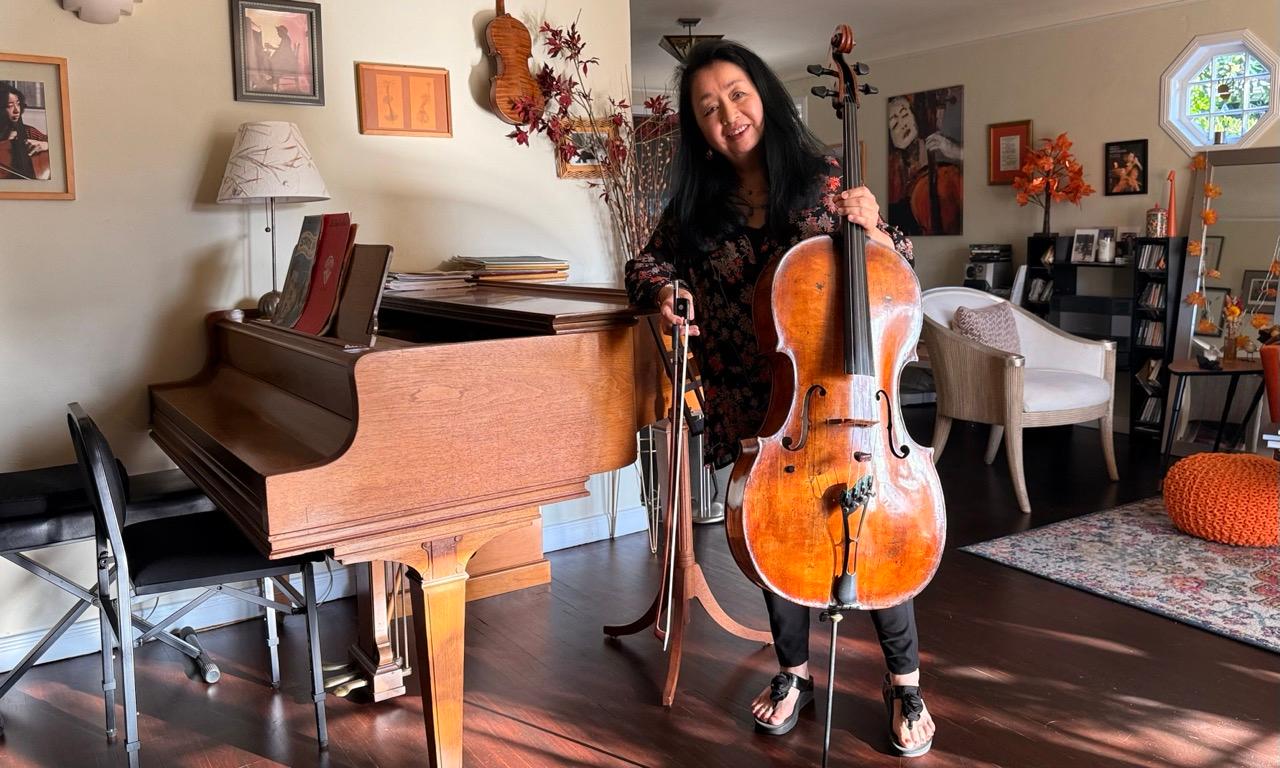
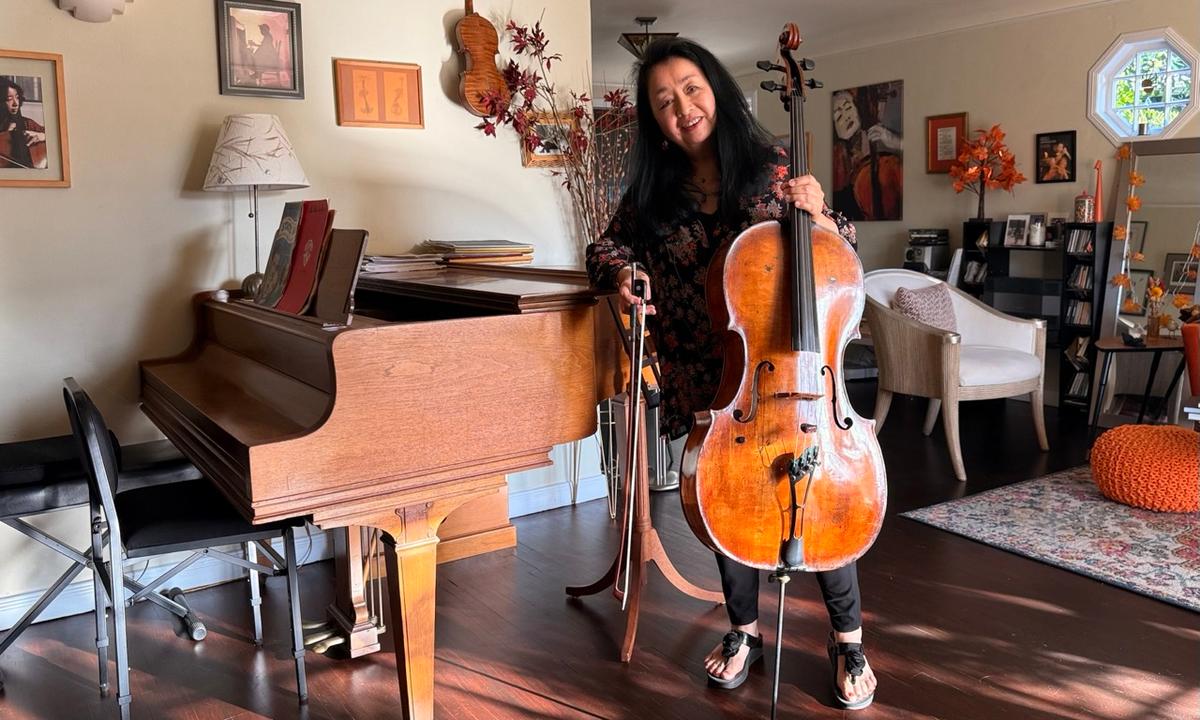
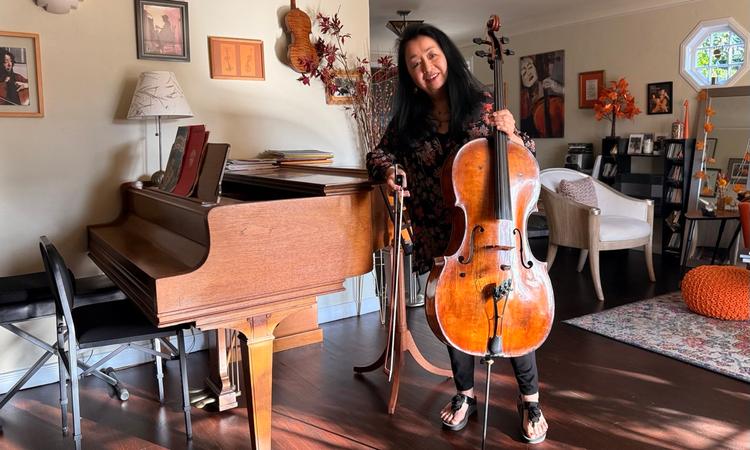
It is in the peaceful surroundings of her Los Angeles home that Cécilia Tsan welcomes us, over a delicious homemade lemonade whose recipe we happily steal from her. The atmosphere is warm, the conversation spontaneous, often punctuated by laughter — but also by moments that send shivers down our spines. Listening to her recount her memories with such extraordinary energy, it is difficult to imagine just how tragically her life began.
Her parents, originally from Shanghai, met when they were very young at the Conservatory of Music. Violinists and composers, they left China to deepen their knowledge of Western music. Their journey took them first to Rome and the prestigious Accademia Nazionale di Santa Cecilia — which would later inspire the name of one of their daughters — followed by an extraordinary wedding at St. Peter’s Basilica in the Vatican, and then Paris.
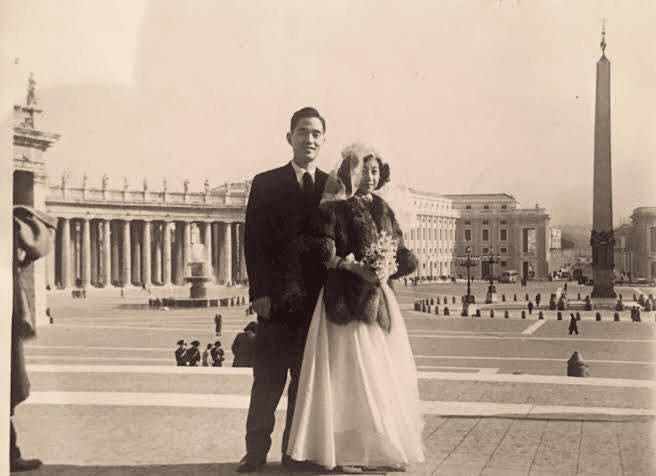
Her father, a promising conductor and composer, quickly caught the attention of one of the great patrons of the time, the Marquis de Cuevas, who commissioned him to compose a ballet about the Chinese imperial consort Yang Guifei. But Cécilia Tsan was only forty days old when her father lost his life in tragic circumstances. He was just 26. Her mother suddenly found herself widowed at 22, in a foreign country, with two babies and almost nothing. Salvation would come from a convent.
A Mother Superior opened its doors to them. Cécilia, her sister and their mother would remain there for nine years. “We weren’t unhappy because we were surrounded by love,” she remembers. The nuns became her family. The Mother Superior, a former aristocrat with impeccable French, made sure the girls received an excellent education; a priest helped pay for her father’s funeral. Later, when he learned that little Cécilia dreamed of playing the cello, he was the one who gave her her first instrument.
The spark that ignited her love for the cello came from Yo-Yo Ma, who would go on to become one of the world’s greatest cellists, and whose family Cécilia’s parents had known in Shanghai. Cécilia was five when she first heard him play. He was four. Watching this little boy already make Bach sing, she burst into tears. She wanted to play the cello, too.
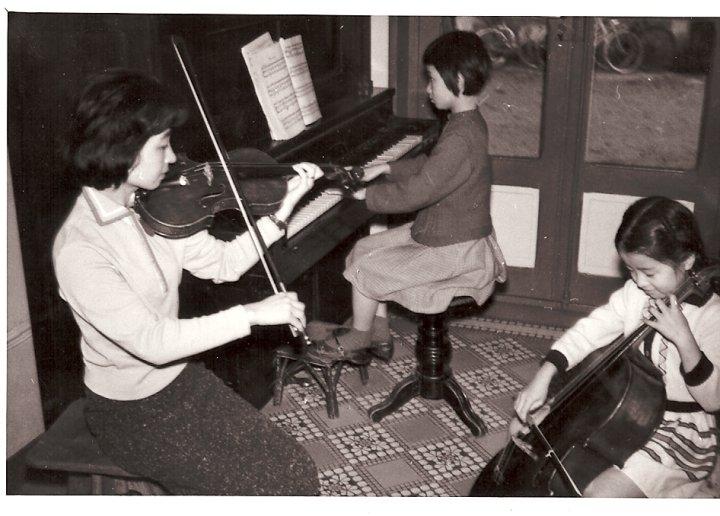
Years later, after studying philosophy and Chinese alongside music, she won the only available place at the Paris Conservatory, beating some 150 candidates. International competitions followed, along with awards, concerts, a career as a soloist and a position as principal cellist.
But talent is not always enough.
In the late 1970s, Cécilia Tsan auditioned for the Paris Opera. The first rounds took place behind a screen. She made it to the final. When the jury discovered she was a woman, everything changed. At the time, she recalls, there was not a single female musician in the orchestra pit. The position ultimately went to a man.
Cécilia was nevertheless granted the right to serve as a substitute. For her first performance, she received a call at 6 p.m. asking her to play Wagner at 7:30 p.m. — a work she had never performed before. In the pit, one musician even stopped playing during difficult passages just to watch and see whether she would make a mistake. She held her ground. She excelled. And they called her back. Again and again.
That experience made her appreciate all the more the importance of the blind auditions she would later encounter in the United States: behind a curtain, there is no way of knowing whether the musician is a man or a woman, or what their background might be. Only the music speaks.
Already well established in her European career, Cécilia Tsan joined her sister in Los Angeles in the early 1990s. She had to make a name for herself all over again, audition, and build a new network. She went on to secure several principal cello positions and gradually established herself in Hollywood’s recording studios. Since then, she estimates that she has contributed to the scores of nearly 800 films.
She has worked with renowned American composer and conductor John Williams on Star Wars, Catch Me If You Can, Memoirs of a Geisha and Disclosure Day, crossed paths with Steven Spielberg in the studio, and performed at the Oscars, the Grammys and the Emmys, as well as on American Idol… It is a dizzying career, yet one that has never been free of obstacles. She would continue to fight against those who tried to push her aside. “I had to fight,” she simply repeats.
Yet when asked what truly matters to her, Cécilia Tsan always comes back to live music — the kind that flows between musicians and their audience. Since 2017, she has curated concerts at the legendary Mount Wilson Observatory, where classical music, jazz and other musical worlds resonate beneath the dome. “It’s a dialogue without words,” she says. “You speak from soul to soul.”
And then there is her father.
One day, during a concert in San Francisco, Cécilia Tsan decided to play as an encore a piece he had been composing when he died. She did not announce it. From the very first notes, she felt a hand on her shoulder, followed by a warmth enveloping her. Deeply moved, she continued to play. When she returned to her dressing room, a stranger knocked on the door. “What did you just play? You were surrounded by light. I have never seen light like that around anyone.” Cécilia Tsan was not even surprised. She had just felt that light herself.
Perhaps her entire story can be found in that moment. The story of a little girl who lost her father before she ever had the chance to know him, but who encountered women and men along the way who protected her, educated her, gave her a cello and allowed her to believe in her own talent. The story of a musician who refused to let prejudice determine the place she was allowed to occupy.
Today, Cécilia Tsan has no intention of slowing down. There are concerts and new projects, a book in the works, and even the idea of a one-woman show combining the story of her life with music. She keeps moving forward. Just as her mother did before her. “We keep going, no matter what. But not by forcing things. We believe.”
M.F.
See Cécilia Tsan in concert on September 26, 2026, for the world premiere of David Benoit’s Concerto for Cello and Orchestra, Resonance and Renewal, and on October 4, 2026, at Mount Wilson.
Sur le même sujet



 L'agenda