Raised in France on stories of wartime suffering and American liberation, Patrick du Tertre cofounded a U.S.-based organization to keep that shared history—and the friendship between the two countries—alive.
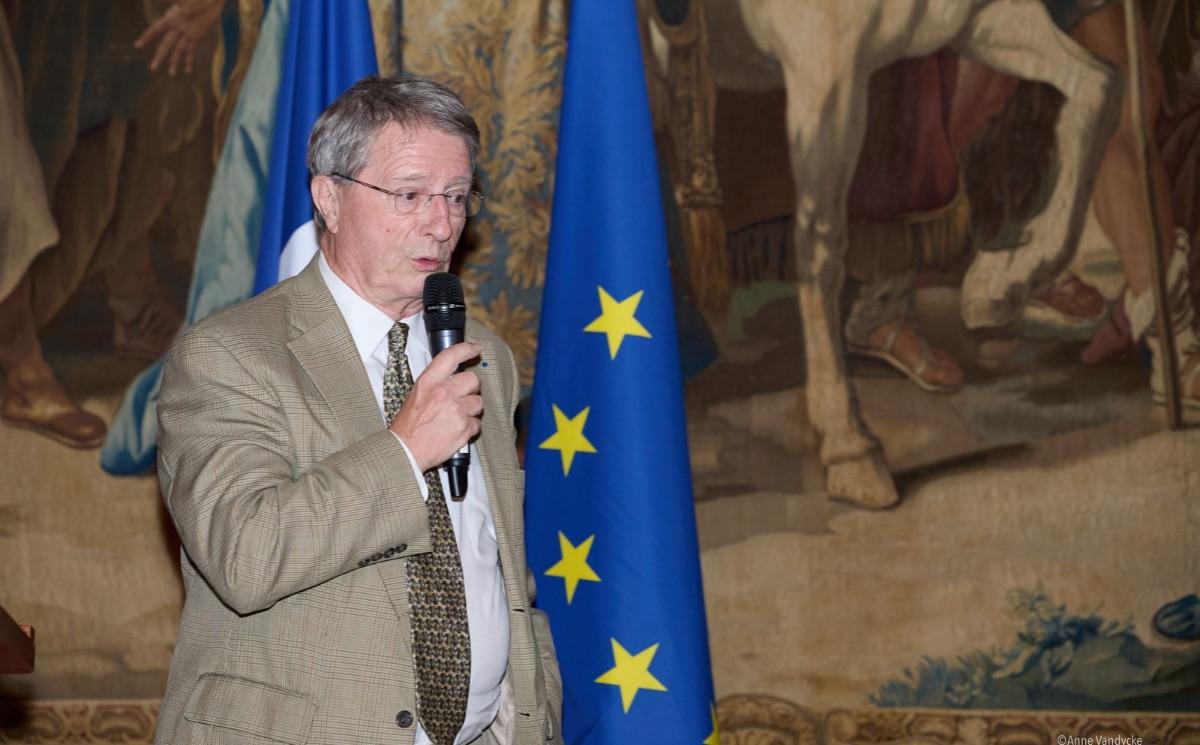
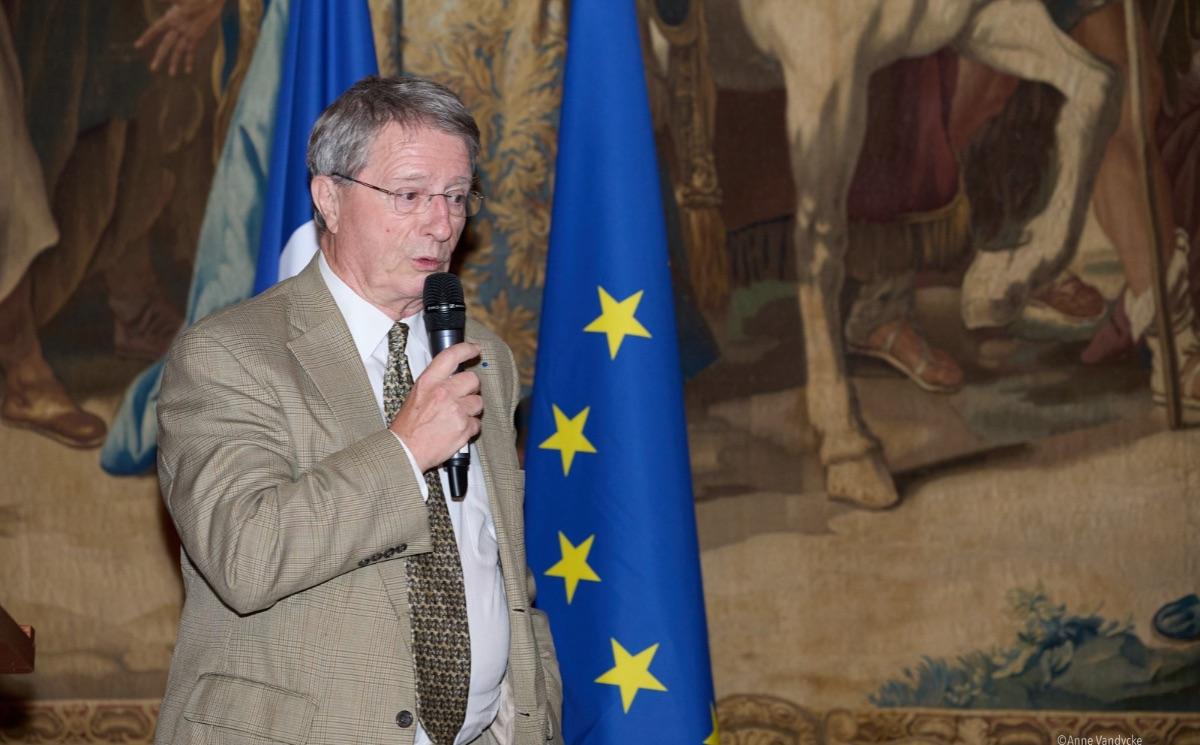
To understand Patrick du Tertre and the organization he helped create, you have to go back well before New York—to his childhood in the Limousin region of central France, in a family still marked by the Second World War.
Born in 1951, du Tertre grew up in a country where memories of the Occupation and Liberation remained vivid. In his family, the war was not just a story in a history book.
America, as seen from rural France
His grandfather, a Resistance leader in southern France, was arrested by the Gestapo, tortured and imprisoned at Fresnes, near Paris, in the section reserved for prisoners sentenced to death. American forces liberated him before he could be executed. One of du Tertre’s uncles spent five years as a prisoner in Germany. Other family members were killed or tortured. “All the stories I heard as a child were steeped in the German occupation and the suffering caused by the Nazi boot in France,” du Tertre recalls.
In that context, the United States held a special place. As a young boy, he noticed the letters “USA” on bags and products arriving in postwar France. He remembers asking his mother, “Mom, what does USA mean?”
Her answer stayed with him: “It’s a great country on the other side of the Atlantic. They’re good, they’re kind, they’re strong, and they freed us from the Nazis.”
America also represented change. In his farming family in the Limousin, American-made objects could seem almost extraordinary. His father told him that the family’s new Case tractor was connected to American postwar aid.
“We didn’t have much, so I looked at that brand-new tractor and thought, ‘How did we pay for it?’ He said, ‘No, no, we didn’t have to pay for it. It was a gift from the Americans.’”
The Marshall Plan, American products and, later, television all fed du Tertre’s fascination with the country. “When you’re a little boy, lost among the sheep in the middle of the Limousin, it’s beautiful, bucolic, wonderful—but it isn’t New York.”
Through Westerns and images of the city, America became a place he dreamed of going. “I imagined the city that never sleeps, with its crowds of different people, its energy, its mix of cultures and knowledge.”
Movies and music deepened that fascination: blues, jazz, Ray Charles and, later, The Doors. Business school introduced him to American approaches to marketing and management.
“So I was completely immersed in America. From a very young age, all I dreamed of was becoming American,” he says.
That connection was already powerful when, at 12, he heard on the radio that President John F. Kennedy had been assassinated. “Why would a 12-year-old boy living 5,000 kilometers from the United States be so moved by the death of a leader of a foreign country?” he still wonders.
When “The French Forgot” became a rallying cry
That personal history helps explain du Tertre’s response in 2003, when relations between France and the United States were especially strained. France opposed the U.S.-led invasion of Iraq, and anti-French sentiment surged in parts of the United States. At the time, Gallup measured favorable views of France at 34%.
Then a New York Post cover jolted him. It showed a white cross in an American military cemetery in Normandy, under the headline “The French Forgot.”
“To me, that implied that we French had forgotten what we owed to the Americans for their intervention on D-Day and afterward.”
The message, he says, felt impossible to accept. “I took it as an insult.” It struck a personal nerve: “I knew that my family—and the country as a whole—felt enormous gratitude toward the Americans then, and I hope still do.”
Du Tertre’s point was not to deny France’s disagreement with the Iraq War. It was to challenge the idea that a political dispute could erase the memory of the Liberation.
The idea for a concrete response took shape over lunch with Jean-Pierre Heim, a French architect living in New York and an adviser to France’s foreign trade network. Heim suggested placing a white or red rose on every grave of an American soldier buried in France.
“It started with one gesture,” du Tertre says. Paul Bensabat and Christian Millet soon joined them. Together, the four launched The French Will Never Forget, an organization created by French citizens living in the United States. Its goal was to express French gratitude to American servicemen and women and help strengthen the relationship between the two countries.
Keeping a shared history alive
Since 2003, The French Will Never Forget has organized commemorations and events focused on Franco-American history. One of the moments that left the deepest impression on its co-founder was the 70th anniversary of D-Day.
Du Tertre still recalls the day in detail. Around a dozen American veterans who had taken part in the landings—including at Omaha Beach and Utah Beach—were gathered for the commemoration.
Then came a symbolic tribute above New York: one million rose petals were to be released over the Statue of Liberty. A former paratrooper, du Tertre was chosen to drop them from a helicopter.
“I was the one who released the rose petals from the helicopter.”
The choice of the Statue of Liberty was meaningful to him. “First, it’s a symbol—it was a great gift we gave to the Americans. Second, it’s a symbol of immigration.”
From the helicopter, the sight was more powerful than he had imagined. “She was disappearing into this swirling cloud of petals. The force of the symbol really got to me.”
A Frenchman who had made his home in the United States, du Tertre found himself above the statue, taking part in a tribute to the countries’ shared history. “I was in a trance in the helicopter, dropping rose petals on this double symbol of Franco-American friendship and immigration to the United States—a country I, too, had made my home.”
The emotion soon overwhelmed him. “By the time I released the last petals, they weren’t just petals—they were mixed with the rain and my tears.”
A legacy for the next generation
For The French Will Never Forget, the mission is not simply to look back. Du Tertre wants the story to keep being told as the last veterans of the Second World War pass away. His work is rooted in a conviction formed during childhood: memories of the Liberation should not be erased by the political disagreements of the present.
More than two decades after the organization was founded, he has also watched the image of France in the United States change. In 2003, during the Iraq crisis, 34% of Americans viewed France favorably. By 2023, Gallup put that figure at 83%.
That change cannot be credited to a single organization, and du Tertre does not claim that it should be. But he believes the group’s work over more than two decades has helped, in its own way, preserve a bond between the two countries.
Ultimately, his commitment rests on an idea that goes beyond diplomacy: remembering the past can also help build a relationship in the present.
More than 20 years after its founding, that idea continues to guide him. Behind the history between two countries, he says, are the stories of people, families and generations—stories that can still be passed on.
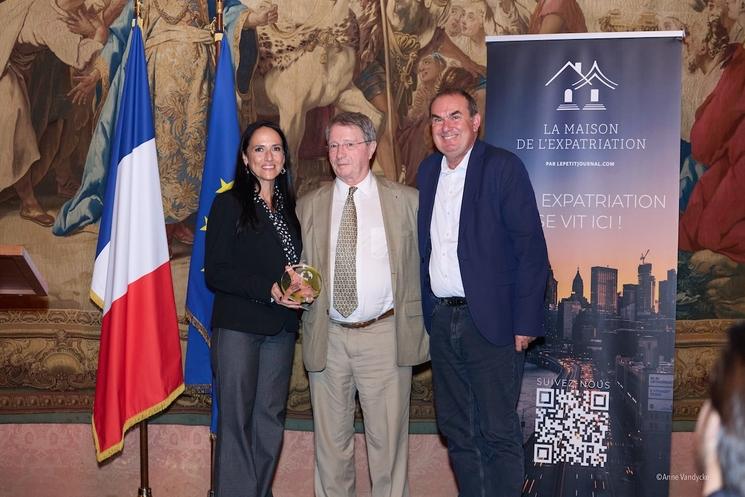
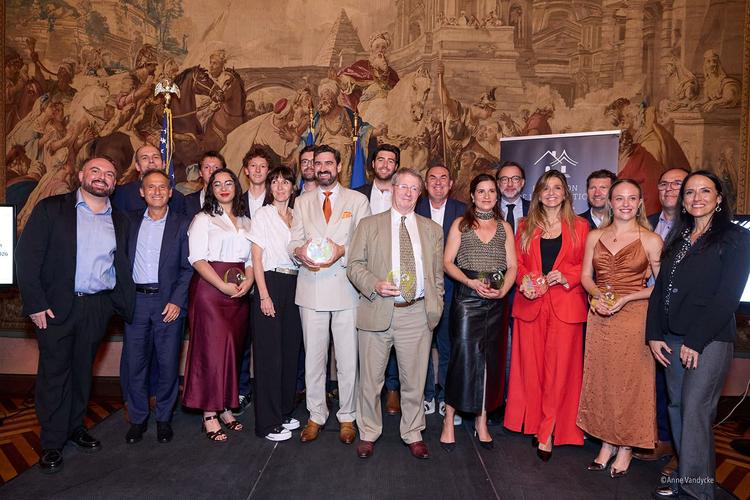
In 2026, du Tertre received the Lifting Up Legacy Award at the Trophées des Français de l’Est américain, presented by Delta Air Lines.
Sur le même sujet

 L'annuaire


 L'agenda